

The Flu Isn’t “Just the Flu” Anymore, But Is the senior flu shot still worth it?
If you grew up in a world of rabbit-ear antennas, rotary phones, and “We’ll be right back after these messages,” you’ve already lived through a lot of change. You’ve watched medicine leap from glass thermometers and paper charts to telehealth and electronic records. But one thing hasn’t changed: every fall and winter, the flu comes back around, just like clockwork. So, is the senior flu shot worth it?
The difference now is what’s at stake.
For adults 65 and older, flu season isn’t just a nuisance or a few days on the couch. It can mean pneumonia, weeks of recovery, a stay in the hospital, or worse. In recent seasons, people 65+ have made up about 70–85% of all flu-related deaths and 50–70% of flu-related hospitalizations in the U.S. So, is the senior flu shot worth it?
That’s why today’s flu vaccines, especially the special “senior” versions, are so important.
- Flu hits seniors hardest. Older adults account for most flu-related hospitalizations and deaths each year.
- Your immune system changes with age. That’s why there are special high-dose and adjuvanted flu shots made specifically for people 65+ to give your immune system an extra boost.
- CDC and experts still strongly recommend vaccination for everyone 6 months and older, especially older adults, for the 2025–26 season, even with new strains vaccination still helps reduce severe illness and hospitalizations.
- Best timing: Aim to get your flu shot in mid-September or October, but “later” is still better than “never” as long as flu is circulating.
- Cost: For most seniors, especially those on Medicare, flu shots are fully covered with no out-of-pocket cost.
- Bottom line: Getting a flu shot each year is one of the simplest, most powerful ways to protect your health, stay out of the hospital, and keep enjoying the life you’ve built.
Why the Flu Is a Bigger Deal After 65
Think back to the days when you could bounce back from a bad cold in a weekend and still go out Saturday night. Our immune systems used to be like new cassette tapes—crisp, responsive, and ready for whatever you recorded onto them.
With age, that “tape” gets worn. The immune system doesn’t respond as quickly or as strongly as it once did. Doctors even have a name for it—immune senescence—which simply means your body has a harder time fighting off infections and bouncing back from them.
Because of this:
- Adults 65 and older are more likely to develop serious flu complications, such as pneumonia, worsening of heart or lung disease, and hospitalization.
- Each flu season, older adults account for the majority of flu-related hospital stays and deaths nationwide.
This isn’t about being “frail” or “weak.” It’s about biology. Even healthy, active older adults have immune systems that simply don’t fire the way they did at 25 or 35.
That’s where the flu vaccine comes in.
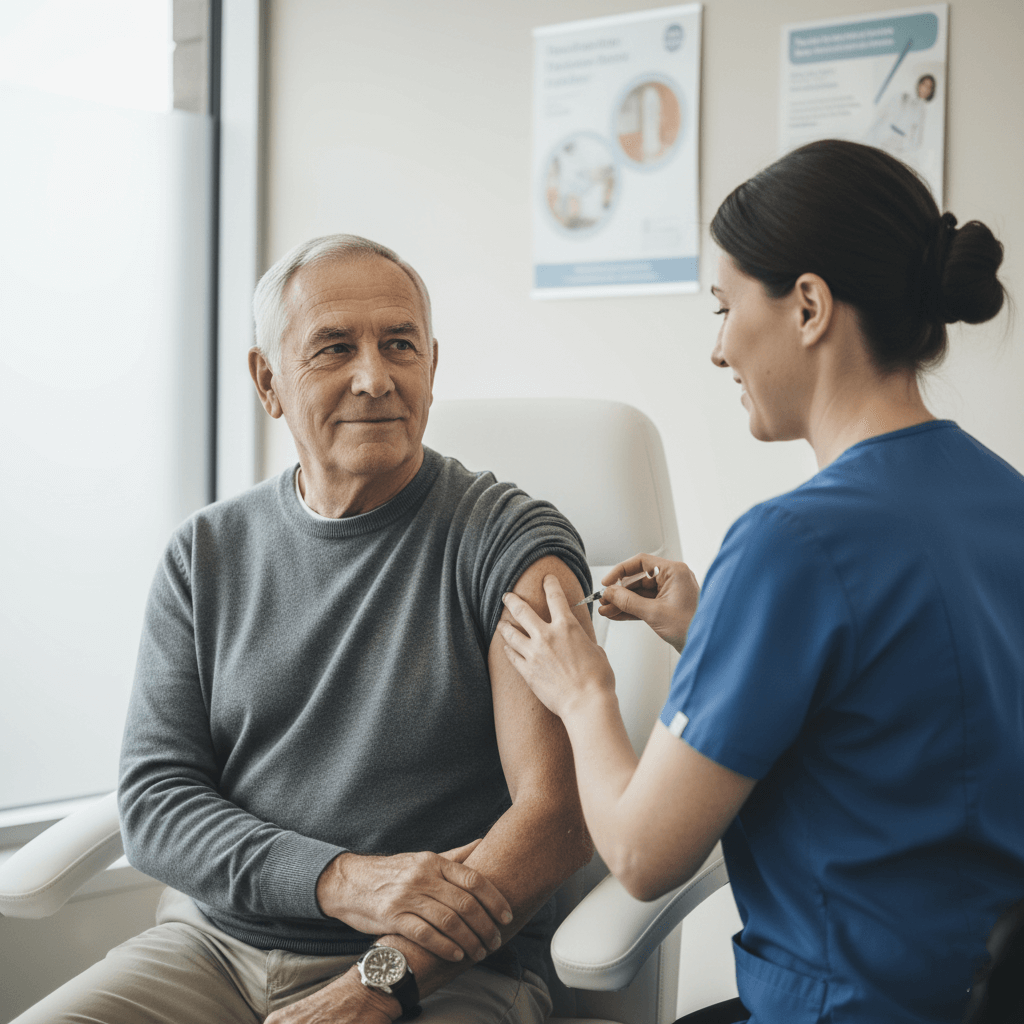
The “Senior” Flu Shot: Not Just a Regular Shot
If you’re 65 or older, the CDC and its vaccine advisory committee (ACIP) now preferentially recommend special flu vaccines designed just for you:
- Fluzone High-Dose (high-dose inactivated vaccine)
- Flublok (recombinant vaccine)
- Fluad (adjuvanted vaccine)
These are often called “enhanced” or “senior” flu shots. What makes them different?
- More antigen: High-dose vaccines contain about 4 times the amount of antigen (the part of the vaccine that teaches your immune system what to fight) compared with a standard flu shot.
- Adjuvants: Ingredients added to help your immune system respond more strongly to the vaccine, particularly helpful when your immune system has slowed with age.
In plain language: these vaccines are like turning up the volume on your immune system so it hears the message loud and clear.
Studies show that these higher-dose or adjuvanted vaccines are more effective than standard-dose flu shots at preventing flu and flu-related complications among older adults.
And importantly, if you can’t get one of these enhanced vaccines, health officials say you should still get any age-appropriate flu shot rather than skip it entirely. Some protection is always better than none.
“But I Heard the Vaccine Isn’t Perfect…”
You’re right—it’s not. And it never has been.
Remember TV antennas and fiddling with the “fine tuning” knob to get the picture just right?
Flu vaccines work a bit like
- The match between the vaccine and circulating viruses is stronger.
- Other years the virus has changed more than expected, so protection against infection may be lower.
Even so, experts keep repeating one key point:
“Even in seasons when vaccine effectiveness is lower, the vaccine still provides some protection and is the best thing you can do to reduce your risk of severe illness.”
In other words, the picture may not be perfect, but it’s still better than no protection. Even in “mismatch” years, flu vaccines have been shown to:
- Lower your chance of being hospitalized for flu.
- Reduce the severity of your illness if you do get sick.
- Shorten the length of illness, getting you back on your feet sooner.
Especially for older adults, that can be the difference between recovering at home and spending days or weeks in a hospital bed.

When Should Seniors Get Their Flu Shot?
Think of the flu season like a long road trip from October to May, with the heaviest traffic between November and March. You want your protection “on board” before that heavy traffic hits. Health experts recommend:
- Best window: Mid-September through October for older adults.
- Why not August? Immunity fades over time, especially in older adults, so getting vaccinated too early can mean your protection is weaker by late winter.
- Is it too late after October? No. CDC and senior advocates emphasize that getting vaccinated later; November, December, even into the new year, still offers protection as long as flu is circulating. Flu season often lasts into April or May.
If you grew up timing everything around the network TV schedule (“Don’t call, Dallas is on!”), think of mid-September to October as prime time for scheduling your shot. But if you miss that “episode,” catch the rerun—just get it done.
What About Side Effects?
Older adults often worry, “Will the high-dose vaccine knock me out?” Most people experience only mild, short-lived side effects, such as:
- Soreness, redness, or swelling where the shot was given
- Mild fatigue
- Low-grade fever or body aches
Doctors describe these as signs that your immune system is doing its job, like the hum of a well-worn record player warming up. Of course, you should call your healthcare provider or seek immediate care if you ever experience:
- Trouble breathing
- Swelling of the face or throat
- A rapidly spreading rash or hives
- Feeling faint or very unwell
Severe allergic reactions are rare, but they need quick attention. If you’ve had a serious reaction to a flu shot or vaccine ingredient in the past, talk with your provider about which option is safest for you.
Cost and Coverage: One Less Thing to Worry About
Here’s some good financial news (and who doesn’t like that?):
- Medicare Part B covers one flu shot per season, and that includes the high-dose or adjuvanted vaccines recommended for older adults—with no out-of-pocket cost, as long as your provider accepts assignment.
- Many private insurance plans and Medicaid programs also cover the flu shot at 100% when you use in-network providers.
That means the biggest investment is usually a short trip to your doctor’s office, local pharmacy, or community clinic—not your wallet.
Flu Shots, COVID Boosters, and Pneumonia Vaccines
For most of your life, you probably thought of “the flu shot” as a once-a-year to-do item. These days, it’s part of a bigger picture. Health experts now encourage older adults to think in terms of layered protection:
- Flu vaccine every year
- Up-to-date COVID boosters, as recommended by the CDC
- Pneumococcal (pneumonia) vaccines, which help protect against serious bacterial infections that often strike after a viral illness like the flu
In many cases, you can safely receive your flu shot and COVID booster at the same visit, one in each arm or spaced slightly apart in the same arm. Always check with your doctor or pharmacist if you have concerns, but for most people, it’s a convenient way to get “double protection” in one appointment.

Everyday Habits Still Matter
No vaccine is a magic shield. The everyday habits your parents and teachers drilled into you still help:
- Wash your hands regularly.
- Cover coughs and sneezes.
- Stay home when you’re sick.
- Open windows or use air filters when possible for better indoor air.
And if you do come down with flu-like symptoms such as fever, cough, body aches, then call your doctor right away, especially if you’re 65+ or have heart, lung, kidney, or immune issues. Antiviral medications work best when started early and can lower the risk of serious complications.
A Simple Shot, a Big Difference
You’ve already done the hard things in life, raising families, building careers, serving your country, caring for aging parents, navigating transitions from typewriters to tablets. Compared to all of that, rolling up your sleeve once a year is a small step with a big payoff.
- It helps protect you from severe illness and hospital stays.
- It helps protect your spouse, friends, grandchildren, and community.
- It helps you stay independent and keep enjoying the life you’ve worked so hard to build.
If you or someone you love is 65 or older, talk with your doctor or pharmacist about getting a high-dose, recombinant, or adjuvanted flu shot this season as soon as possible.
If you or your loved one could benefit from compassionate, reliable in-home care—whether during flu season or all year long, reach out to Happy Mountain Home Care.
📞 Call 954-654-8186
🌐 Or visit www.happymtn.com
Our team is here to help you stay safer, more comfortable, and more independent, right at home.

Dr. Samantha Montealegre, DNP, PMHNP-BC, is a Board-Certified Psychiatric Mental Health Nurse Practitioner with over 15 years of experience in direct patient care. She brings extensive expertise in family-centered care, ensuring that every client receives compassionate, reliable, and personalized support to enhance their well-being and independence.