Category: Uncategorized

  • Breakthrough U.S. POINTER Study: Hope for Staying Sharp as We Age

    Breakthrough U.S. POINTER Study: Hope for Staying Sharp as We Age

    How a Healthful Lifestyle Can Unlock Your Brain’s Potential

    Remember the slow hum of your transistor radio, tuning stations by hand, or the satisfying click when your VHS landed perfectly on the blank tape? Those moments weren’t just about analog charm; they stirred your brain. Today, a landmark study shows that simple, sustained lifestyle changes, like exercise, social connection, and better eating, can help our brains stay sharp well into our golden years. It’s like fine-tuning your mind’s frequency, but with real-world results.

    What Is the U.S. POINTER Study?

    The U.S. POINTER study—officially, the U.S. Study to Protect Brain Health Through Lifestyle Intervention to Reduce Risk—is a two‑year, multi‑site, randomized clinical trial aimed at older adults (ages 60–79) already at heightened risk for cognitive decline. It’s modeled after Finland’s groundbreaking FINGER study but tailored for a diverse U.S. population.

    Two Paths Toward a Sharper Mind

    The study compared two approaches to lifestyle change—both aimed at bolstering brain health, but differing in support and structure:

    Exercising with Coach for Memory Care

    Structured Intervention

    • 38 peer‑team sessions over two years
    • Prescribed mix of aerobic, resistance, and stretching exercises
    • Adherence to the brain‑healthy MIND diet (Mediterranean + DASH influences)
    • Cognitive activities (e.g., BrainHQ training, group puzzles or discussions)
    • Regular check‑ins on heart health and goal‑setting with a clinician

    Self-Guided Intervention

    • Participants attended only six group meetings for encouragement and shared learning
    • No structured goals or coaching; people chose the changes that suited their lives

    Both were delivered with high adherence and safety across groups

    Yes, Brain Health Can Be Preserved (and Even Improved)

    Cognitive Benefits, Across the Board

    Both intervention groups showed improvements in global cognition over two years.

    • The structured group gained more
    • Executive function (think planning, multitasking) improved more with structure; memory gains were comparable between groups
    • These benefits held steady regardless of age, sex, ethnicity, heart health risk, or even APOE ε4 status, the gene associated with dementia risk
    • Interestingly, those starting with lower baseline cognition seemed to gain even more from the structured program
    US Pointer Study improves both groups

    Safety & Commitment

    • High retention: 89% completed the two-year follow-up
    • Fewer adverse events were reported in the structured group compared to the self-guided group

    Why These Results Matter

    If you’re a Gen Xer or Boomer, maybe you’ve tracked your favorite team’s stats with a pen and notepad, or rewound mixtapes by pencil. Today, memory and mental agility matter even more. Here’s why this study gives hope:

    • Change Is Still Possible After 60 (and beyond):
      • U.S. POINTER shows that consistent, meaningful lifestyle shifts—not pills—can boost your brain’s performance well into later life.
    • Community Matters:
      • Sharing meals, chatting after a BrainHQ session, or stretching together with peers—community connection waters your brain’s garden.
    • Better Than Yesterday:
      • Even modest, self-guided efforts improved cognition. If you’re taking steps now—however small—you’re already on the right track.
    • It’s Not Just About Memory:
      • Planning your grocery runs or balancing checkbooks? That executive function improvement can help keep independence longer.
    • Built to Last:
      • The Alzheimer’s Association is investing heavily—$50 million already and another $40 million over four years—to track these benefits and bring programs into more communities

    What This Feels Like in Real Life

    Picture cleaning out your garage and discovering your old Polaroid collection—suddenly memories return. That’s what U.S. POINTER participants experienced:

    • One participant, 66, started with just 10 minutes of daily activity and eventually felt “forever changed.” She now works out in pajamas, walks dogs, and has shed weight—all while staying mentally sharp.
    • Another, 72, in the self-guided group, found motivation through weekly meetings and now walks five miles a day, volunteers, and keeps his mind active.

    What Can You Do: Starting Today

    • Move a little each day: Walk, stretch, or dance like no one’s watching, 10 minutes can become 30.
    • Snack smart: Lean into whole grains, leafy greens, berries, think MIND diet staples.
    • Challenge your brain: Do a crossword, play bridge, try a new recipe, or log onto sites like BrainHQ.
    • Stay connected: Call an old friend, join a book club, ping your grandchildren.
    • Keep health on the radar: Ask your doctor about blood pressure, cholesterol, and heart health goals.

    Little steps add up, but this study shows that adding structure, like group classes or guided check-ins, can give you an extra boost.

    Reason for Hope (and Action)

    Just like mastering a mixtape or fixing a vintage stereo, caring for your brain takes intention, and it’s worth it. The U.S. POINTER study shows we can defy expectations and sharpen our minds through practical, community-centered efforts.

    It’s evidence you can take to heart, and to action.

    If you or a loved one could benefit from compassionate, structured support for brain health and daily living, reach out to Happy Mountain Home Care at 954-654-8186 or visit www.happymtn.com.

    Your best chapters are still ahead—with clarity, purpose, and hope.
    Happy Mountain Home Care Administrator Samantha Montealegre

    Dr. Samantha Montealegre, DNP, PMHNP-BC, is a Board-Certified Psychiatric Mental Health Nurse Practitioner with over 15 years of experience in direct patient care. She brings extensive expertise in family-centered care, ensuring that every client receives compassionate, reliable, and personalized support to enhance their well-being and independence.
  • August Is National Make-A-Will Month: Here’s How Gen X & Boomers Can Protect What Matters in Just 90 Minutes

    August Is National Make-A-Will Month: Here’s How Gen X & Boomers Can Protect What Matters in Just 90 Minutes

    You know that sinking feeling when you can’t find the password to your own streaming account? Now imagine your family trying to locate your life insurance policy, online banking info, or pet care instructions; without you there to explain. That’s why your future self will thank you for making a will today.

    Why Now? National Make-A-Will Month

    August is National Make-A-Will Month, a reminder that creating a will isn’t just for the wealthy, retired, or terminally ill, it’s a gift of clarity for the people you love. For Gen X and Boomers, juggling careers, kids, and aging parents, a will is a time-saving, chaos-reducing tool that ensures your wishes are carried out exactly how you intend.

    Myth-Busting: Common Reasons People Avoid Making a Will

    • Myth: I don’t have enough assets to bother.
      Fact: Your will covers more than money, things like guardianship for kids, digital accounts, sentimental items, and even pet care.
    • Myth: Online wills are risky.
      Fact: Reputable online platforms can be secure and legally binding. Just verify state requirements and store your will safely.
    • Myth: I’m too young to need one.
      Fact: Life is unpredictable. A will gives you peace of mind today; and you can update it anytime.
    • Myth: My spouse automatically gets everything.
      Fact: Without a will, state law decides who gets what. That may not align with your wishes, especially for blended families or unmarried partners.
    • Myth: It takes too long and costs too much.
      Fact: You can complete a basic will in under two hours, often for less than the cost of a night out.

    Your 90-Minute Action Plan

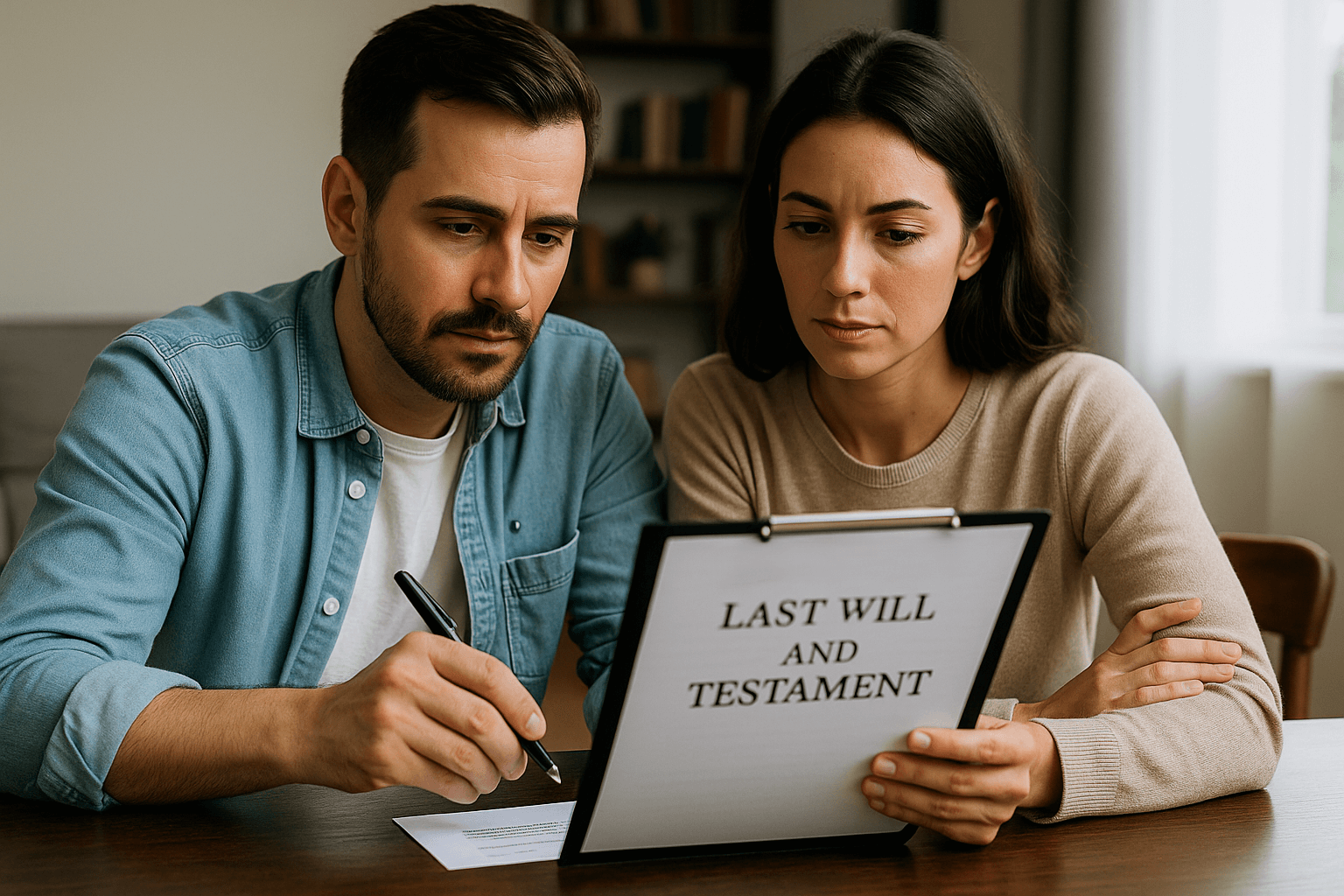
    Smiling couiple reviewing their wills

    🕒 30-Minute Quick Start

    • List all assets: bank accounts, retirement funds, investments, property.
    • Choose guardians for children (and pets).
    • Select beneficiaries for accounts and possessions.
    • Gather passwords and key documents in one secure location.

    🕒 30-Minute Protections

    • Appoint a healthcare proxy (medical decision-maker).
    • Create a financial power of attorney (POA).
    • Complete a HIPAA release so trusted people can access medical info.

    🕒 30-Minute Execution

    • Choose your method: DIY online service (check state rules) or attorney.
    • Sign in front of witnesses as required by your state.
    • Store securely and share location with your executor and loved ones.

    Will vs Trust: When Each Makes Sense

    A will is like your “final instruction manual,” activated after your passing. It names guardians, outlines distributions, and designates an executor. A trust, meanwhile, can take effect while you’re alive and offers more privacy, faster asset transfer, and sometimes tax advantages. Wills are great for straightforward estates; trusts are better if you own property in multiple states, have significant assets, or want to avoid probate entirely. Many people benefit from having both.

    The Gen X & Boomer Estate Planning Checklist

    Estate Planning Checklist for Seniors
    • Digital assets: email, cloud storage, social media, crypto wallets
    • Subscriptions & memberships: streaming, fitness, clubs
    • Pet care instructions & vet contacts
    • Student loan details & repayment plans
    • Small business shares or partnership agreements
    • Life insurance beneficiaries
    • 401(k), IRA, and brokerage account updates
    • Transfer-on-Death (TOD) / Payable-on-Death (POD) account designations
    • Household “how-to” (bill payments, maintenance schedules)

    Costs, Time, and Easy Wins

    A simple DIY will can cost $0–$200 and be finished in under two hours. Attorney-drafted wills range from $300–$1,000, depending on complexity. Updating beneficiary designations on accounts is free, and often bypasses probate entirely.

    Caregiver Tie-In: Reducing Chaos During Health Events

    For family caregivers, the hardest days are often made harder by uncertainty. A will, combined with a POA and healthcare proxy, gives your loved ones a clear roadmap so they can focus on care, not court dates.

    How to Start Today

    Happy Mountain Home Care supports Broward County families in planning for the future. Call 954-654-8186 for a free in-home safety assessment. Because safeguarding your home is just as important as safeguarding your future .

    FAQ

    Q1: Do I need a lawyer to make a will?
    A: Not always. Many states allow self-made wills, but an attorney can ensure it meets local laws.

    Q2: What happens if I move to another state?
    A: Review your will with an attorney; laws can differ. Updates are usually simple.

    Q3: Where should I store my will?
    A: In a fireproof safe or with your attorney. Tell your executor where to find it.

    Q4: How often should I update my will?
    A: After major life events: marriage, divorce, births, moves, or big purchases.

    Q5: Can I include digital assets in my will?
    A: Yes. List accounts, logins, and instructions for your executor.

    Disclaimer

    This article is for general informational purposes only and is not legal advice. Consult an attorney licensed in your state for guidance tailored to your situation.

    Happy Mountain Home Care Administrator Samantha Montealegre

    Dr. Samantha Montealegre, DNP, PMHNP-BC, is a Board-Certified Psychiatric Mental Health Nurse Practitioner with over 15 years of experience in direct patient care. She brings extensive expertise in family-centered care, ensuring that every client receives compassionate, reliable, and personalized support to enhance their well-being and independence.

  • August Alert: 7 Hurricane Preps Florida Seniors Need NOW!

    August Alert: 7 Hurricane Preps Florida Seniors Need NOW!

    August in Florida means more than just hot afternoons and afternoon thunderstorms. It means hurricane season is kicking into high gear. While the season officially starts in June, August and September are when most hurricanes form and threaten our communities. For seniors living in Florida, now is the most important time to get ready.

    Even if you’ve weathered storms before, each hurricane is different, and so is every year. Taking time to prepare, checking your supplies, and updating your plans could be the difference between a safe, comfortable storm season and a stressful, risky one.

    In this article, you’ll find:

    • Simple, practical steps to protect yourself at home
    • Smart tips for those with special medical needs or caregivers
    • Where to find trustworthy information and help
    • And most importantly, how Happy Mountain Home Care can support you every step of the way

    So, let’s get started—because the best time to prepare is before the storm clouds appear.

    Why August Matters in Hurricane Season

    You may have heard that hurricane season runs from June 1st to November 30th. That’s true, but here’s a fact many people don’t realize: Nearly 80% of hurricanes and major tropical storms in Florida happen in August, September, and early October. The Atlantic waters are warm, the weather patterns are just right, and storms can form quickly.

    Hurricane by Month

    That means, if you’re reading this now, the clock is ticking. Don’t wait until a hurricane is already on the news to think about what you’ll do or what you need. Take some easy steps today, and you’ll thank yourself later.

    What Makes Seniors More Vulnerable During Hurricanes?

    Everyone in Florida faces hurricane risks, but older adults have extra challenges:

    • Mobility: Getting out quickly can be hard if you use a walker, wheelchair, or have trouble walking.
    • Medical Needs: You might rely on medications, oxygen, or other equipment that needs electricity or refills.
    • Living Alone: Many seniors live by themselves and may not have someone nearby to help lift heavy things, install storm shutters, or drive in an emergency.
    • Stress and Change: Hurricanes can cause worry and confusion, especially for those with memory problems or anxiety.

    The good news? Planning ahead is the best way to reduce these risks. With a few simple actions, you can stay safer and more comfortable, no matter what the weather brings.

    Your August Hurricane Preparedness Checklist

    Here’s a handy checklist, made just for Florida seniors and those who help care for them. (You can print this out and keep it on your fridge!)

    1. Know Your Evacuation Zone
      • Florida uses a color-coded system of evacuation zones, from Zone A (most at risk) through Zone F (least at risk).
      • Find your zone now: Call your county emergency management office, or Visit FloridaDisaster.org/knowyourzone
      • If you live in a mobile home, you must evacuate for any hurricane warning—even a Category 1 storm.
    2. Update Your Emergency Contacts
      • Write down the phone numbers of family, friends, neighbors, doctors, and your pharmacy.
      • Keep a copy in your wallet, your phone, and taped to the fridge.
      • Let someone you trust know your hurricane plan.
    3. Gather Your Supplies – You’ll need at least 7 days’ worth of the following:
      • Bottled water (1 gallon per person, per day)
      • Canned or shelf-stable food
      • Manual can opener
      • Flashlights and extra batteries
      • First aid kit
      • Face masks and hand sanitizer
      • Toilet paper and wipes
      • Clothing, blankets, and sturdy shoes
      • Cash (in case ATMs don’t work)
      • Copies of important documents (ID, insurance, medical info)
      • Don’t forget your pets, have food and a carrier ready for them, too!
    4. Prepare Your Medications and Medical Needs
      • Get a 14-day supply of all prescription medicines. Florida law lets you refill early during hurricane warnings.
      • List all your medications and dosages. Keep copies in your emergency kit.
      • If you use medical equipment (oxygen, CPAP, insulin, etc.), ask your doctor or supplier how to prepare if power goes out.
      • Store medications in a waterproof container.
    5. Make a Stay-or-Go Plan
      • Decide NOW if you’ll stay home, go to a friend’s or family member’s house, or use a public shelter.
      • If you need transportation or have special medical needs, register for your county’s Special Needs Shelter as soon as possible. This helps emergency workers know you’ll need extra help.
      • Know where your closest shelters are. Many counties also offer pet-friendly shelters but most require advanced registration.
    6. Check Your Home
      • Clear the yard of loose items (patio furniture, planters).
      • Install storm shutters or board up windows.
      • Charge your phone and backup batteries.
      • Have a flashlight or battery-powered radio ready for power outages.
    7. Stay Informed
      • Sign up for local emergency alerts on your phone or email.
      • Keep a battery-powered radio handy for updates if the power goes out.
      • Listen to weather updates and follow official advice, if you’re told to evacuate, do it right away.
    Hurricane Supplies

    Special Tips for Seniors Who Receive Home Care

    If you get help at home from a caregiver, nurse, or family member, your needs may be a little different:

    • Talk to your care team now: Ask your agency about their emergency plans. Let them know if you plan to stay or evacuate.
    • Update your care schedule: If a storm is coming, make sure you have enough supplies and medicine until your caregiver can safely return.
    • Keep emergency numbers close: Know how to contact your agency or backup care provider.
    • Backup for power needs: If you use electric medical equipment, ask about battery backups or generator options. Some utility companies have programs for customers with medical needs, register now if you haven’t already.
    Senior with caretaker discussing hurricane preparations

    What About Special Needs Shelters?

    Florida offers special shelters for people who need extra help—like electricity for medical equipment, help with mobility, or basic medical support.

    To use a Special Needs Shelter, you MUST register with your county ahead of time. Vulnerable Population Registry

    • Contact your local emergency management office (or visit their website) for details.
    • These shelters fill up fast, don’t wait until a hurricane is on the way.

    Don’t Forget About Pets!

    Pets are part of the family, too.

    • If you go to a shelter, check if it’s pet-friendly.
    • Prepare a kit for your pet: food, water, leash, carrier, medicines, and ID tags.

    Stay Connected, Why Communication Matters

    Isolation can make hurricane season even scarier. Before storms arrive:

    • Create a “hurricane buddy system.” Pick a neighbor or friend who will check on you (and you can check on them).
    • Let family know your plans. Text or call loved ones before, during, and after a storm—even just to say “I’m OK.”

    If phones go down, try sending a text, which often works when calls do not.

    Don’t Fall for Scams

    Sadly, scammers target seniors before and after hurricanes. Beware of:

    • Anyone demanding cash for repairs or supplies upfront
    • “Contractors” going door-to-door right after storms
    • Emails or phone calls asking for your Social Security or banking info

    Only work with trusted companies and official agencies.

    Where to Get More Help and Information

    Why Waiting Isn’t Worth It

    Every year, news stories show long lines at stores, crowded highways, and full shelters as hurricanes approach. Seniors who wait to prepare often face:

    • Empty shelves and shortages (especially for medicine and supplies)
    • Trouble getting help if you change your mind last minute
    • More stress and confusion in a crisis

    By getting ready in August, you have peace of mind. You can help your family and friends, too. Be a role model for your community!

    How Happy Mountain Home Care Can Help

    At Happy Mountain Home Care, we know that hurricanes can feel overwhelming, especially for seniors living alone or with health concerns. That’s why our team is ready to help before, during, and after every storm. Here’s what we can do for you:

    • Help you make an emergency plan tailored to your needs
    • Assist with gathering supplies, medication management, and evacuation planning
    • Ensure you have support and someone to check on you before and after the storm
    • Provide in-home care during hurricane season, so you never feel alone

    You don’t have to go through hurricane season by yourself.

    Call us today at 954-654-8186 or visit www.happymtn.com to learn how Happy Mountain Home Care can keep you safe, healthy, and confident, all year long.

    This hurricane season, preparation is the best protection. Take action today, and let Happy Mountain Home Care be your trusted partner, whatever the weather brings.

    Happy Mountain Home Care Administrator Samantha Montealegre

    Dr. Samantha Montealegre, DNP, PMHNP-BC, is a Board-Certified Psychiatric Mental Health Nurse Practitioner with over 15 years of experience in direct patient care. She brings extensive expertise in family-centered care, ensuring that every client receives compassionate, reliable, and personalized support to enhance their well-being and independence.

  • When Should Seniors Stop Driving? The Truth About the Rumor and How to Stay Safe in Florida

    When Should Seniors Stop Driving? The Truth About the Rumor and How to Stay Safe in Florida

    Recently, a rumor started spreading online saying that beginning in August 2025, all seniors over the age of 70 would need to take new tests to keep their driver’s licenses. According to the story, seniors would have to go to the DMV every year, pass medical exams, and take road tests. This caused a lot of fear and confusion among older adults and their families.

    Here’s the truth: That story is false. It came from a fake news website and has no basis in law. There is no new rule in the U.S. that forces seniors to take extra tests just because of their age.

    In this article, we’ll break down what Florida law really says about older drivers, help you understand how to decide when it’s time to stop driving, and explain how home care services like Happy Mountain Home Care can support seniors who give up their car keys.

    Debunking the Rumor About Senior Driving Laws

    Several websites and news outlets, including Snopes and AL.com, have confirmed that the viral article about new driving laws is false. It claimed that starting in 2025, seniors over age 70 would face stricter rules for license renewal, including yearly in-person visits, vision exams, and even driving tests.

    However, no such law has been passed at the federal level. In fact, the U.S. government does not control driver’s license rules, each state makes its own rules. While some states have additional requirements for older drivers, none of them require all seniors to take yearly driving tests.

    So, if you or your loved one is worried about losing a license due to this supposed “new law,” don’t be. It is not real. What does matter, however, is staying safe and understanding what your state actually requires.

    What Are the Real Rules for Senior Drivers in Florida?

    Florida does have a few rules that apply to drivers once they reach a certain age, but they are designed to protect people, not punish them.

    Here’s what the Florida Department of Highway Safety and Motor Vehicles requires:

    • All drivers must renew their license every 8 years.
    • At age 80, drivers must renew every 6 years instead of 8.
    • Drivers age 80 or older must pass a vision test each time they renew their license.

    The vision test can be done at a DMV location or submitted through a licensed eye doctor. If a person passes the vision test, they can continue driving.

    There is no law that requires seniors to take memory or road tests, unless a medical issue is reported that may affect their ability to drive. In those cases, Florida may require a medical evaluation or additional testing—but that is based on health, not age.

    If a senior no longer wants to drive, they can turn in their license and get a free state ID card. This ID can be used for anything that requires proof of identity, like doctor’s appointments, banking, and travel.

    How to Know When It’s Time to Stop Driving

    Even though Florida doesn’t require most seniors to stop driving at a certain age, it’s important to know the signs that it might no longer be safe.

    Many older adults continue to drive safely into their 80s and even 90s. But others may notice changes in their body or mind that make driving harder. Here are some signs to watch for:

    • Getting lost on roads that used to be familiar
    • New dents or scratches on the car
    • Slower reaction times when braking or making decisions
    • Difficulty seeing road signs, traffic lights, or pedestrians
    • Trouble hearing sirens, horns, or other important sounds
    • Feeling anxious or nervous when behind the wheel
    • Other drivers honking often or frequently getting passed
    • Loved ones expressing concern about driving ability

    Sometimes, just one of these things might not be serious. But if you notice a pattern or if more than one of these signs is happening, it’s time to talk about whether driving is still safe.

    Having the Conversation With a Loved One

    Talking to a parent or loved one about giving up their car keys can be tough. For many seniors, driving means freedom. Giving that up can feel like losing part of their independence.

    Seniors having a driving conversation
    Seniors having a driving conversation

    Here are some tips to help make the conversation respectful and helpful:

    • Pick a quiet time when you’re both calm and not rushed.
    • Share what you’ve observed in a gentle way: “I noticed you seemed unsure when turning left the other day.”
    • Focus on safety: “I just want to make sure you’re safe and don’t get hurt.”
    • Offer support: “We’ll make sure you can still go everywhere you need.”
    • Involve a doctor or other professional if needed to offer guidance.

    Remember, the goal is not to take away independence, but to find safer ways for your loved one to stay active and connected.

    What to Do If You’re Not Sure

    Sometimes it’s hard to tell if someone should stop driving. If you’re unsure, there are a few things you can try:

    • Ride along with your loved one and observe their driving habits
    • Suggest a driving evaluation through a local driving school or occupational therapist
    • Talk to their doctor about any health conditions or medications that could affect driving

    Some seniors are open to the idea of driving less instead of stopping completely. For example, they might stop driving at night, on highways, or in bad weather. Gradually reducing driving can make the transition easier.

    Transportation Options in Florida for Seniors

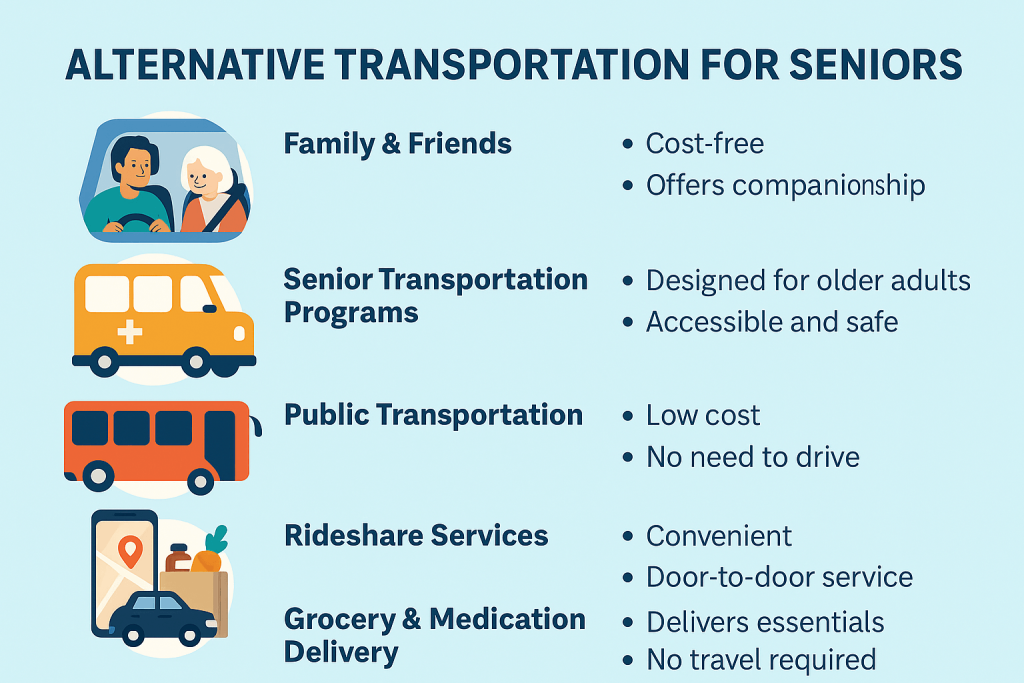
    One of the biggest worries about giving up driving is: “How will I get around?” The good news is, there are lots of ways seniors can stay mobile and active:

    • Family and Friends: Sometimes a simple schedule can help, maybe a daughter handles doctor visits, and a neighbor helps with errands.
    • Senior Transportation Programs: Many Florida counties offer rides for older adults. These may include shuttle buses, door-to-door services, and volunteer driver programs.
    • Public Transportation: Many cities in Florida offer discounted bus fares or special senior passes. Local routes are often easy to learn.
    • Rideshare Services: Uber and Lyft can be a good choice, especially if someone helps the senior book the ride.
    • Grocery and Medication Delivery: Reducing the need to travel helps. Many stores offer delivery services for groceries and prescriptions.

    By planning ahead and trying different options, seniors can still enjoy life without driving.

    How Happy Mountain Home Care Supports Seniors Who No Longer Drive

    At Happy Mountain Home Care, we understand how hard it can be to give up driving. That’s why we offer transportation and daily support services to help seniors stay independent, safe, and engaged.

    Our caregivers can:

    • Drive seniors to doctor’s appointments
    • Assist with grocery shopping and errands
    • Provide companionship during outings
    • Help with personal care, meal prep, and more

    We serve families in Broward County and nearby areas. Our goal is to make sure seniors feel supported and never alone.

    Whether it’s a few hours a week or daily visits, Happy Mountain Home Care is here to help.

    It’s About Safety, Not Age

    There is no law that says seniors must stop driving at a certain age. But sometimes, for health and safety reasons, it’s the right choice. The key is to look at each person’s abilities and situation.

    If you or a loved one is unsure, start the conversation. Talk to a doctor. Take a test drive. Look into transportation options.

    Giving up driving doesn’t have to mean giving up freedom. Happy Mountain Home Care is here to help with that next step.

    Happy Mountain Home Care Administrator Samantha Montealegre

    Dr. Samantha Montealegre, DNP, PMHNP-BC, is a Board-Certified Psychiatric Mental Health Nurse Practitioner with over 15 years of experience in direct patient care. She brings extensive expertise in family-centered care, ensuring that every client receives compassionate, reliable, and personalized support to enhance their well-being and independence.

  • Cheers to 60 Years: Protecting the Legacy of the Older Americans Act

    Cheers to 60 Years: Protecting the Legacy of the Older Americans Act

    Celebrating 60 Years of Support for Older Americans

    This year marks the 60th anniversary of the Older Americans Act (OAA), a landmark law signed on July 14th, 1965 alongside Medicare and Medicaid. Often called the backbone of U.S. aging policy, the OAA set up a nationwide system to deliver community-based services for seniors. For six decades, it has quietly funded programs that help older Americans live healthier, more independent lives. From senior center activities and home-delivered meals to caregiver support and transportation, the OAA touches nearly every aspect of senior well-being. It’s made “an enormous positive difference” in the lives of millions, helping elders remain independent and avoid costly nursing homes through services like meal delivery, home care, transportation, and protection from. In short, the Older Americans Act has been a lifeline, enabling seniors to age with dignity in their own homes and communities.

    What Has the Older Americans Act Achieved?

    Thanks to the OAA, millions of seniors receive crucial support every year. In fact, about one in six older Americans (over 12 million people) benefit from OAA-funded programs annually. These programs address seniors’ most basic needs and more:

    Seniors Enjoying a meal provided by the Older Adults Act.
    Seniors Enjoying a meal provided by the Older Adults Act.
    • Nutritious Meals: The OAA’s nutrition programs (like Meals on Wheels and community dining) deliver food and companionship to older adults. In 2023 alone, they provided approximately 181 million home-delivered meals and tens of millions of congregate (group) meals to seniors nation. This not only fights hunger but also combats isolation for those living alone.
    • Health and Independence: OAA services include in-home assistance (such as help with chores or personal care), transportation to medical appointments, exercise and falls-prevention classes, and more. These supports have proven effective in keeping seniors healthy at home. For example, a federal report found 86% of family caregivers said OAA services helped them care longer for an elderly loved one, delaying the need for nursing home placement. The OAA’s help with daily needs means older adults can often stay in their homes rather than entering costly institutions.
    • Caregiver Relief and Jobs: The OAA also funds the National Family Caregiver Support Program to give family caregivers counseling, respite breaks, and training. And it runs the Senior Community Service Employment Program, the only senior-focused job training program in the U.S., which helps older adults re-enter the workforce. These efforts boost household finances and provide purpose, keeping more seniors out of poverty.

    Here in Florida, the Older Americans Act’s impact is especially profound. Florida is home to over 6.3 million residents age 60 and up, one of the largest senior populations in the country. To serve this community, Florida’s Department of Elder Affairs leverages about $154 million in OAA funding each year. With that support, Florida’s aging network delivered over 10 million meals to seniors in just one recent year, a vital service for nutrition and social connection. OAA funds in Florida also support senior centers, transportation, home care aides, dementia initiatives, and more. These programs foster independence and health for Florida’s seniors, allowing thousands to age in place in their own homes. The OAA truly matters in our state, where so many older adults count on these resources every day.

    A New Threat in the FY 2026 Federal Budget

    As we celebrate the OAA’s 60-year legacy, we must also face a serious challenge: the Act’s future is being threatened by proposed federal budget cuts. Lawmakers are now debating the Fiscal Year 2026 budget (which starts October 1, 2025), and the current proposal includes deep reductions to OAA-funded programs. Specifically, the administration’s FY26 budget request calls for eliminating or slashing several services that seniors rely on:

    • Health Promotion Programs – Eliminated: Funding for evidence-based health promotion and disease prevention for older adults would be completely eliminated. Programs that help seniors manage chronic conditions and stay well could vanish.
    • Prevention and Public Health Fund – Eliminated: The budget would also zero out the Prevention and Public Health Fund, which has supported initiatives like vaccines and fall-prevention for older people.
    • Elder Rights Protection – Cut by $5 Million: Programs that safeguard seniors from abuse, neglect, and scams would lose $5 million in funding, and some elder justice initiatives would be eliminated entirely. This could leave vulnerable seniors with less protection.
    • Aging and Disability Resource Centers – Eliminated: Local one-stop resource centers that help seniors and caregivers find services (known as ADRCs) would lose all federal funding, making it harder for families to get guidance on care.

    These proposed cuts come at a time when senior needs are growing, not shrinking. America’s population is aging rapidly – by 2030, more than 20% of the country will be 65 or older. Costs of living (and caregiving) are rising, and many older adults already struggle to get by. Now is not the time to cut back on senior services. In fact, demand for programs like meals, home care, and caregiver support is only increasing as the baby boomers age. The Older Americans Act was designed to respond flexibly to local needs, and it has long enjoyed bipartisan support in Congress. But if these budget cuts go through, the very programs that help seniors age well could be scaled back or stopped when they’re needed most.

    It’s also important to note the larger context. Recently, a law nicknamed the “One Big Beautiful Bill Act” was passed, and it already jeopardizes the health and economic well-being of many older Americans. This legislation introduced drastic cuts to Medicaid and added work requirements for benefits, threatening health coverage for millions of low-income seniors. It also tightens rules for SNAP (food assistance), which will exacerbate senior hunger at a time when 7 million older adults already struggle to get enough healthy food. The bottom line is that older Americans are facing serious challenges from multiple fronts. Cutting Older Americans Act programs on top of these changes would be a heavy blow to seniors who rely on community support to survive.

    How We Can Protect the Older Americans Act

    The Older Americans Act has helped millions of our parents, grandparents, friends, and neighbors live better lives. We can’t let 60 years of progress unravel quietly. What can we do to ensure the OAA continues to support older Americans for decades to come? First, we can raise our voices. Lawmakers need to hear how important OAA-funded services are to families and communities. Advocacy organizations like the National Council on Aging are urging everyone to speak out to Congress, to tell your Senators and Representatives why programs like Meals on Wheels, senior centers, and caregiver support matter to you. Personal stories are powerful. If your family has been touched by an OAA service, share that experience. Remind our leaders that aging well is a bipartisan issue that affects every community. With more Americans living longer, the need for these supports will only grow. Investing in seniors’ well-being now benefits us all, because it reduces healthcare costs, prevents nursing home admissions, and honors the people who raised and built our communities.

    Secondly, we can stay informed and involved at the local level. Many OAA programs are implemented through local agencies (like your county’s Area Agency on Aging or senior center). By participating in community meetings or volunteering, you can help ensure these services thrive. Here in Florida, for example, community support has helped expand senior meal programs and caregiver workshops. Keeping an eye on state and local budgets can also make a difference, state funds often match OAA funds to run programs, so it’s important our state leaders prioritize seniors as well.

    Active Seniors playing botchy ball.
    Active Seniors playing botchy ball.

    Finally, consider reaching out to organizations that serve older adults to see how you can help. Happy Mountain Home Care is one such resource. As a local non-medical home care agency serving South Florida’s seniors, we are deeply invested in helping older adults age safely and comfortably at home. We stay up-to-date on programs like the Older Americans Act because we know how valuable they are for our clients and community. If you have questions about senior services, caregiving, or how to navigate resources for an aging loved one, please contact us. We can help you understand what support is available, whether it’s an OAA-funded meal delivery or a respite care program, and how to access it. And if you’re concerned about the future of these programs, we can guide you on ways to advocate effectively.

    We’re Here to Help – Contact Happy Mountain Home Care

    At Happy Mountain Home Care, our mission is to ensure seniors live with dignity, comfort, and love in their own homes. The Older Americans Act’s 60-year legacy has been instrumental in making that possible for so many. We believe every senior deserves the nutrition, care, and community connection they need to thrive. If you or your family needs assistance caring for an elderly loved one, or if you simply want to learn more about available senior services in South Florida, reach out to us today. Our professional, compassionate team is ready to help you explore home care options, connect with local programs, and answer any questions about aging well. Together, we can honor the promise of the Older Americans Act by ensuring our seniors get the support they deserve, now and for the next 60 years to come.

    Happy Mountain Home Care Administrator Samantha Montealegre

    Dr. Samantha Montealegre, DNP, PMHNP-BC, is a Board-Certified Psychiatric Mental Health Nurse Practitioner with over 15 years of experience in direct patient care. She brings extensive expertise in family-centered care, ensuring that every client receives compassionate, reliable, and personalized support to enhance their well-being and independence.

  • Too Hot to Handle: July Heat Wave Safety Tips for Older Adults

    Too Hot to Handle: July Heat Wave Safety Tips for Older Adults

    In South Florida, when July arrives, the high temperatures pose a serious threat, particularly for the elderly. While many view summer as a time for enjoying the beach and sunlight, older individuals are at risk of facing severe health issues due to the scorching heat and potential dehydration.

    A large number of elderly individuals may not be aware of their dehydration until they experience severe symptoms. Aging reduces the body’s capacity to maintain temperature and fluid equilibrium, making older adults in Florida more vulnerable to heat-related issues due to the hot and humid climate in the region.

    What makes older adults more vulnerable?

    Dehydration means more than just “feeling thirsty”. The reality for older adults is more complex, and more dangerous. Several age-related changes contribute to this increased vulnerability:

    • Diminished Thirst Perception: Seniors may not feel thirsty even when their bodies are already dangerously low on fluids.
    • Kidney Function Decline: With age, kidneys lose efficiency, making it harder to conserve water and electrolytes.
    • Medication Side Effects: Many common medications (especially diuretics, laxatives, and high blood pressure drugs) increase fluid loss or suppress thirst.
    • Mobility or Cognitive Impairment: Seniors with dementia, arthritis, or limited mobility may not be able to access water easily without assistance.
    • Chronic Conditions: Diseases like diabetes, heart disease, and Parkinson’s can all contribute to fluid imbalances.

    In South Florida, where both heat and humidity is particularly intense during July and August, these risks compound quickly. Even brief exposure to the midday sun can lead to rapid fluid loss through sweating. Especially if a senior is already underhydrated or taking medications that alter fluid balances.

    The Warning Signs of Dehydration in Older Adults

    • Dry mouth or cracked lips
    • Dizziness or unsteadiness
    • Headaches
    • Dark-colored urine or very low urine output
    • Muscle cramping
    • Rapid heartbeat
    • Fatigue or lethargy
    • Confusion or sudden change in mental status
    • Low blood pressure or fainting
    • Constipation or dry skin
    • Inability to sweat or produce tears
    • Sunken eyes or dry-looking skin

    If symptoms like confusion, inability to stay awake, or inability to keep fluids down occur, immediate medical care is needed. Dehydration can quickly escalate into heat exhaustion, urinary tract infections, kidney problems, or heatstroke — a potentially life-threatening condition.

    Real-World Risks in the Florida Summer

    In the intense heat of a South Florida summer, older adults are at higher risk even if they remain indoors. Homes without proper air conditioning or ventilation can become dangerously warm, especially for seniors who live alone or have limited mobility. And because aging bodies are less efficient at temperature regulation, even moderate heat can strain the cardiovascular system and lead to increased falls, strokes, or heart events.

    It’s not just about avoiding outdoor activities, it’s about maintaining safe body temperature and hydration all day long.

    How to Keep Seniors Safe and Hydrated

    Hydrating

    Fortunately, dehydration is preventable, but it requires proactive planning and daily support. Here’s how you can protect your aging loved ones during peak summer heat:

    • Encourage Regular Sipping: Rather than waiting until mealtimes, seniors should sip water or electrolyte drinks throughout the day.
    • Make Fluids Accessible: Keep a water bottle or lidded cup within reach at all times; at bedside tables, living room chairs, walkers, and kitchen counters.
    • Use High-Water Foods: Serve water-rich fruits like watermelon, oranges, grapes, and cucumbers, as well as soups, broths, and smoothies.
    • Avoid Dehydrators: Limit caffeine, alcohol, and salty snacks, all of which increase fluid loss.
    • Stay Cool: Use fans, air conditioning, cooling towels, and avoid or limit physical activity during the hottest parts of the day (10 a.m. to 4 p.m.).
    • Track Intake: Create a simple hydration log or use an app to help caregivers monitor daily fluid intake.
    • Ask About Medications: Speak with the senior’s doctor about medications that may increase fluid loss or interfere with hydration.
    • Educate and Support: Some seniors are unaware of the dangers of dehydration or simply forget to drink. Reminders from caregivers can go a long way.

    Even better, consider having a professional caregiver present — someone who not only provides companionship but also gently encourages hydration, prepares healthy meals, and recognizes the early signs of trouble.

    Partner With a Home Care Agency You Can Trust

    Staying hydrated and cool

    At Happy Mountain Home Care, we understand how vulnerable seniors can be in the Florida summer — especially those living with chronic conditions or reduced mobility. Our caregivers are trained to monitor hydration, prepare hydrating meals and beverages, and ensure that your loved one stays safe, cool, and cared for — even during a heatwave.

    Whether your loved one needs support a few hours a day or ongoing daily care, we’re here to help.

    💧 Don’t Wait Until It’s Too Late

    Call us today for a free in-home consultation. Let’s work together to make sure your loved one stays healthy, hydrated, and thriving all summer long.

    Happy Mountain Home Care Administrator Samantha Montealegre

    Dr. Samantha Montealegre, DNP, PMHNP-BC, is a Board-Certified Psychiatric Mental Health Nurse Practitioner with over 15 years of experience in direct patient care. She brings extensive expertise in family-centered care, ensuring that every client receives compassionate, reliable, and personalized support to enhance their well-being and independence.